Tarot Card Meanings Explained for Beginners
Understanding tarot card meanings can feel overwhelming at first. With 78 cards, each carrying layered symbolism, it’s easy to feel unsure where to begin.
This guide introduces tarot as a structured system of symbolic interpretation, helping you understand how card meanings reflect patterns, emotions, and internal dynamics.
Understanding Tarot Card Meanings Through Symbolic Interpretation
Tarot card meanings are not fixed definitions, but symbolic representations of patterns within human experience. Each card reflects themes such as emotional states, behavioural tendencies, and transitional phases.
Rather than predicting outcomes, tarot reveals what is already present beneath the surface, offering a way to observe and understand internal patterns with greater clarity.
Structure of a Tarot Deck
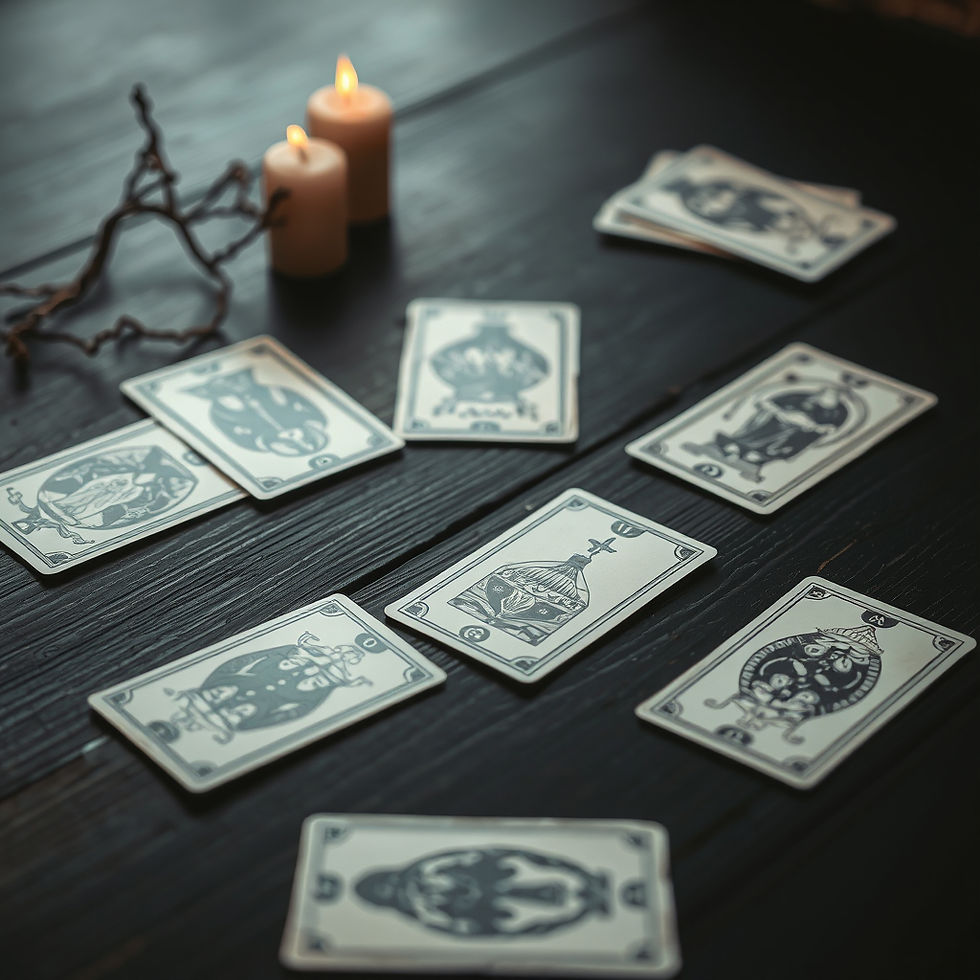
A standard tarot deck consists of 78 cards, divided into two main groups.
Major Arcana, Archetypes and Life Patterns
The Major Arcana represents significant life themes and psychological archetypes. These cards often appear during periods of change, decision-making, or personal development.
Examples include:
The Fool: Openness, beginnings, potential.
The Magician: Intention, action, personal agency.
The High Priestess: Intuition, inner awareness.
Death: Transformation, transition, endings.
Minor Arcana, Everyday Experiences and Influences
The Minor Arcana reflects daily situations and emotional or behavioural responses. It is divided into four suits:
Cups: Emotions, relationships, connection.
Pentacles: Work, stability, material life.
Swords: Thoughts, communication, conflict.
Wands: Action, energy, direction.
How Tarot Card Meanings Are Interpreted
Tarot interpretation is based on context and the relationship between cards.
Each reading considers:
the symbolic meaning of each card
its position within a spread
how it interacts with surrounding cards
Patterns become clearer when multiple cards point toward similar themes, revealing underlying emotional or situational dynamics.
Upright and Reversed Tarot Meanings
Tarot cards may appear in two orientations:
Upright: Direct or externally expressed patterns.
Reversed: Internalised, blocked, or developing patterns.
For example:
The Lovers (upright) reflects alignment and connection.
The Lovers (reversed) suggests imbalance or misalignment.
Reversals add depth, but they are not essential for beginners.
A Simple Tarot Spread for Beginners
A three-card spread provides a clear starting structure:
Past: Previous influences.
Present: Current situation.
Direction: Potential development.
This format allows you to observe how patterns evolve over time.
Learning Tarot Meanings Through Pattern Recognition
Understanding tarot becomes easier when approached through patterns rather than memorisation.
Focus on themes
Look for emotional and symbolic repetition across cards rather than isolated meanings.
Practice daily
Draw a single card and reflect on how it connects to your day or internal state.
Use journaling
Recording your interpretations helps you recognise recurring patterns and deepen your understanding over time.
Common Misconceptions About Tarot
Tarot does not predict a fixed future.
Cards are not inherently positive or negative.
Meaning comes from interpretation and context.
Tarot functions as a reflective system, not a deterministic one.
Using Tarot for Self-Understanding
Tarot can be used as a structured tool for:
recognising emotional patterns
exploring decisions and uncertainty
developing self-awareness.
It provides a framework for observing internal dynamics clearly and symbolically.
Conclusion
Tarot card meanings are best understood as a language of patterns rather than fixed definitions. Each card reflects a part of a broader internal landscape, revealing connections between thoughts, emotions, and experiences.
With consistent use, tarot becomes less about interpretation and more about recognition: a way of seeing what has always been present, but not always visible.


Comments