Rune Meanings and Graphology: Understanding Emotions Through Symbols and Handwriting
Updated: Apr 5
Understanding emotions often requires more than direct analysis. Patterns in behaviour, symbols, and expression can reveal insights that are not immediately visible. Rune meanings and graphology offer two structured approaches to exploring these deeper emotional patterns.
This guide explains how runes and handwriting analysis work, and how they can be used together to support emotional awareness and self-understanding.
What Are Runes? Rune Meanings Explained
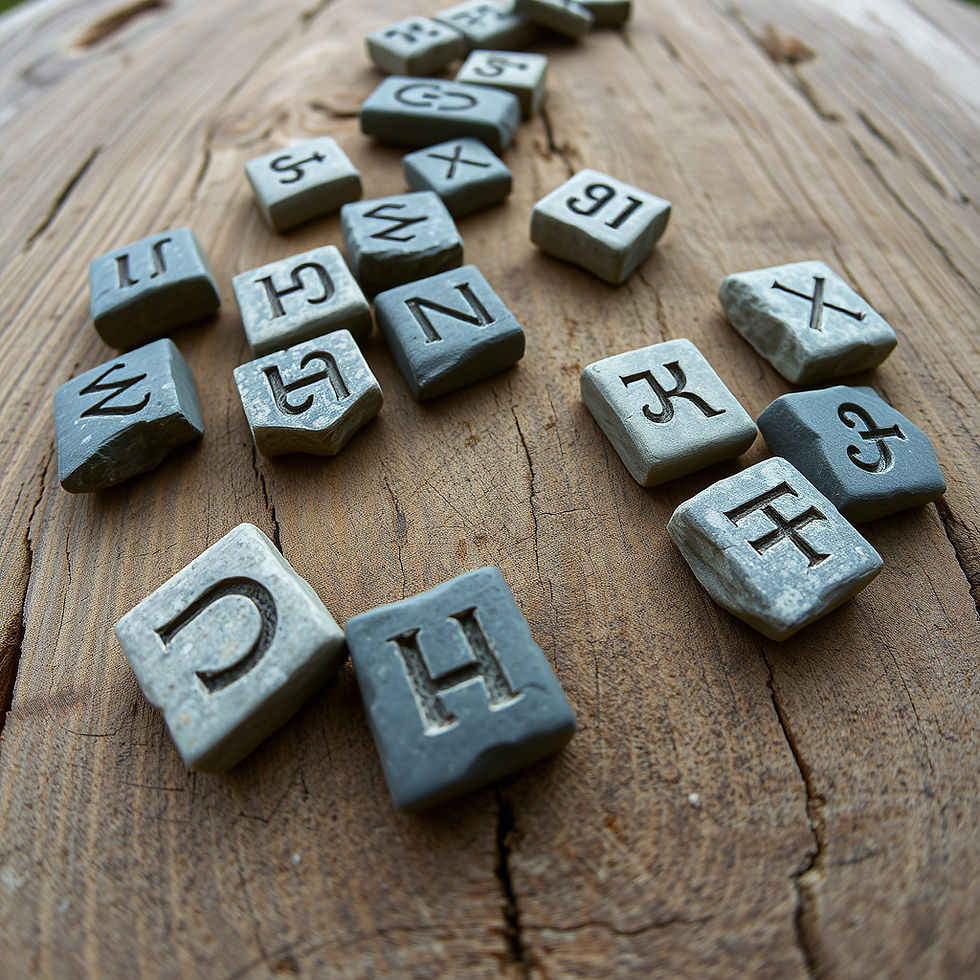
Runes are an ancient symbolic system originating from early Germanic traditions. Each rune represents a specific concept, pattern, or life dynamic, often used for reflection and insight.
Rather than functioning as fixed answers, rune meanings highlight underlying influences and emotional patterns present in a situation.
How Rune Readings Work
A rune reading involves selecting or casting runes and interpreting them based on:
individual rune meanings
their position and orientation
their relationship to each other
Each rune reflects a specific theme.
Examples include:
Fehu: growth, resources, movement.
Hagalaz: disruption, change, external forces.
Eiwaz: transition, transformation, internal development.
These symbols offer a structured way to reflect on emotional states and situational dynamics.
Using Runes for Emotional Awareness
Runes can be used to explore emotions by focusing on patterns rather than isolated feelings.
A simple process:
define a clear emotional focus
draw or cast runes
reflect on how the symbols relate to current experiences
This creates a framework for understanding emotional responses through symbolic representation.
What Is Graphology? Handwriting Analysis Explained
Graphology is the study of handwriting as an expression of personality traits and emotional patterns. The way a person writes reflects internal processes, including thought patterns, emotional responses, and behavioural tendencies.
Key Elements in Handwriting Analysis
Slant: Emotional expression and relational tendencies.
Size: Confidence and behavioural presence.
Pressure: Emotional intensity and internal energy.
Spacing: Boundaries and interaction with others.
These elements combine to form a structured representation of emotional and psychological patterns.
How Graphology Reveals Emotional Patterns
Handwriting reflects internal states through consistent physical expression. By analysing writing characteristics, it becomes possible to observe:
emotional tendencies
stress patterns
behavioural responses
This creates a direct link between physical movement and internal experience.
Combining Rune Meanings and Graphology
Runes and graphology operate through different systems but reflect similar underlying patterns.
Runes highlight symbolic and situational influences.
Graphology reflects internalised behavioural and emotional tendencies.
Used together, they create a layered understanding of emotional experience.
Practical Example of Combined Interpretation
A rune such as Eiwaz, associated with transformation, may appear during a period of internal change.
If handwriting analysis shows:
increased pressure
stronger forward slant
This may indicate emotional intensity and active engagement with that transformation.
The alignment between symbol and expression reinforces the presence of a deeper pattern.
Benefits of Using Runes and Graphology for Self-Understanding
Increased self-awareness through pattern recognition
Clarity in understanding emotional responses
Structured reflection using symbolic and physical cues
Improved decision-making based on deeper insight
Conclusion
Rune meanings and graphology offer structured systems for understanding emotions through symbols and physical expression. Rather than focusing on isolated feelings, these methods reveal recurring patterns that shape behaviour and perception.
By working with both symbolic interpretation and handwriting analysis, emotional awareness becomes more precise, grounded, and actionable.


Comments